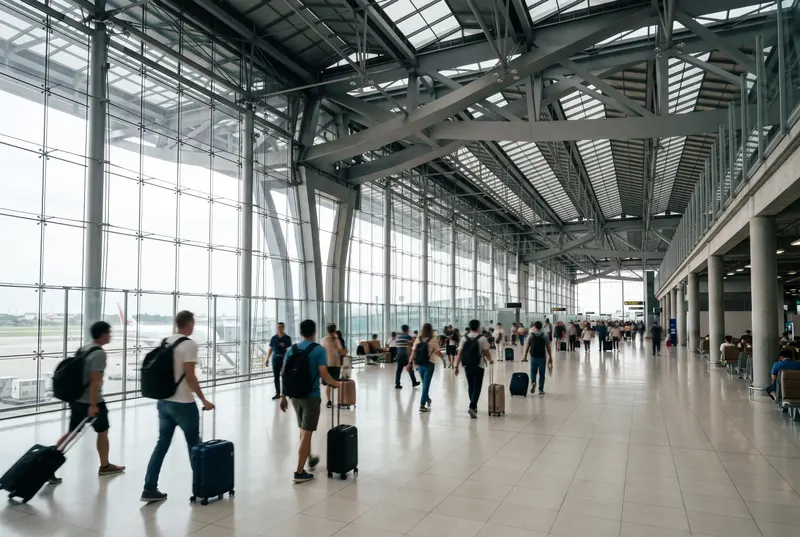
Travellers departing from Bangkok’s Suvarnabhumi Airport in 2026 should continue to adhere to the 100ml liquids rule for cabin baggage, with specific guidelines for bringing traditional Thai foods and exceptions for medicines and infant supplies, emphasising careful packing and early arrival.
Travellers leaving Bangkok’s Suvarnabhumi Airport in 2026 should assume the familiar liquids rule still applies: every bottle, tube, spray or similar item in hand baggage must be 100ml or smaller, and all of them must fit into one transparent resealable bag of up to one litre. Suvarnabhumi’s official guidance says a container over 100ml is not allowed in the cabin even if it is only partly full, so the size marked on the package matters more than how much is left inside.
That makes packing for a Thailand trip much simpler if done early. Toiletries should be transferred into travel-sized containers before reaching the airport, while creams, gels, pastes and aerosols should all be treated as liquids for screening purposes. AirHelp’s guide notes that this is the standard approach at most airports, although a few places with newer screening equipment now allow larger containers; that is not the case at Suvarnabhumi, where the airport and the Civil Aviation Authority of Thailand still keep to the 100ml limit.
The same rule also affects souvenirs and snacks. Suvarnabhumi says local or traditional foods that contain liquids and exceed 100ml should go in checked baggage, which matters for items such as curry paste, chilli sauce and similar Thai specialities that many visitors may not instinctively think of as liquids. If you want to bring them home, it is safer to pack them with leak protection in your hold luggage rather than risk losing them at security.
There are limited exceptions for medicines, baby food and special dietary liquids, but these must be declared at the security screening point. That means anyone travelling with prescription medicine or infant supplies should keep supporting documents close at hand and separate the items from the rest of their toiletries before joining the queue. The airport’s guidance is clear that these are exceptions, not a general relaxation of the rule.
For most leisure travellers, the practical takeaway is straightforward: keep cabin liquids in one clear one-litre bag, put anything larger in checked baggage, and re-check airport and airline guidance before departure in case local procedures change. Suvarnabhumi’s own advice also underlines the value of arriving with enough time to clear security and still reach the gate without rushing, particularly if you need to sort out a bag that does not meet the screening rules.